
Madison Heights City Directory Shelves
Madison Heights has no confirmed single public shelf that supplies every year and every street. Instead, the local record starts with three Heritage Book volumes, then reaches outward to the Oakland History Center's named Pontiac and Oakland directory volumes. The regional books matter because Madison Heights incorporated from Royal Oak Township territory in 1955. A pre-city name may therefore be cataloged under a regional, township, or neighboring-place heading rather than under Madison Heights alone. The reported 1958 standalone item is a lead to verify through a licensed genealogy collection, not a promise of open access.
| Collection | Years | Where Held | Access |
|---|---|---|---|
| Madison Heights Heritage Book | Before 1900-1964 | City and library Heritage Book page | Free online PDF; local names, schools, groups, and events |
| Heritage Book updates | 1965-1992; 1993-2005 | City and Madison Heights Public Library | Free online PDFs |
| Pontiac and Oakland city directories | Named volumes, 1860-1962 | Oakland History Center shelf list | Onsite archival shelf; suburban inclusion varies |
| Pontiac telephone directories | 1931, 1935, 1937, 1939-1940, 1942-1944 | Oakland History Center shelf list | Onsite address and telephone clues |
| R.F.D. resident directory | 1919 | Oakland History Center shelf list | Onsite rural-route bridge |
| Reported Madison Heights directory | 1958 | Digitized genealogy collection | Reported image; direct access may require a subscription |
Publication on a shelf does not prove that a particular Madison Heights address was canvassed. Check the street guide and a neighboring-city volume together, especially for years near incorporation. The local obituary file and all-school yearbooks are companion sources when a directory year is missing.
Madison Heights Heritage Books Preserve Names
The Heritage Books are not household directories, yet they are the strongest city-specific starting point for civic names, schools, organizations, businesses, and events. The original volume covers the period before 1900 through 1964. It was published in 1965 after three years of work by the Madison Heights Junior Women's Club. A Historical Commission revision led to the 1965-1992 update, followed by a 1993-2005 update. Their source trail includes newspaper clippings, annual reports, school material, library and city files, civic questionnaires, and interviews with early residents.
The Library of Michigan family-history resources image offers a useful next stop after a Heritage Book name or event is identified.
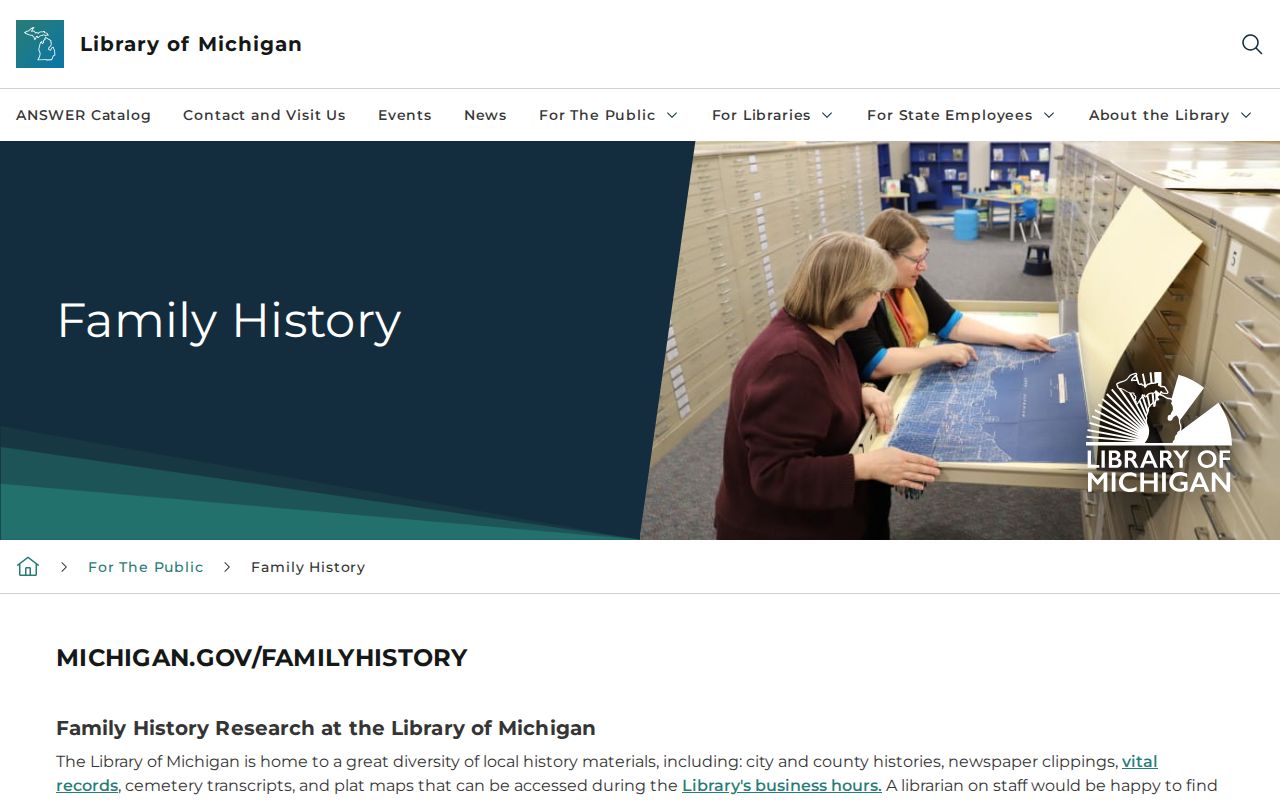
Library staff can identify county histories, clippings, cemetery transcripts, plat maps, and other local material during business hours. Its FamilySearch Affiliate access can also help when a related source is licensed onsite.
Madison Heights City Directories Before 1955
Before city incorporation, search the regional record under Royal Oak Township and nearby Pontiac or Royal Oak references. The Oakland History Center begins with the Pontiac-Flint City Directory for 1860-61 from Loomis & Talbotts. Its shelf list continues with Pontiac City and Oakland County Directory volumes for 1886, 1895, 1898, 1902, 1904, 1907, 1912, and 1915, followed by Polk's Pontiac City Directory volumes from 1922 onward. A 1930 Greater Pontiac Polk's Official Arrow Street Guide and a 1962 Polk's Home Directory add street and resident indexes.
The 1919 Directory of Residents on the R.F.D. Routes in the Vicinity of Pontiac, Birmingham, Farmington can bridge rural-route research. Its geography is broader than Madison Heights. Use it to test names and route context, then move to deeds, plats, or census records for a parcel-level conclusion.
- 1860-61: Pontiac-Flint regional volume on the Oakland History Center shelf.
- 1886-1915: named Pontiac and Oakland volumes cover the regional transition.
- 1919: rural-route directory can reveal pre-incorporation context.
- 1922-1962: Polk and later Pontiac volumes provide the most sustained named run.
- 1955: Madison Heights incorporated from east-side Royal Oak Township territory.
Note: A regional directory can supply a name or street clue, but its inclusion and municipal labeling must be checked against the volume itself.
Reading a Madison Heights City Directory
The 1958 Madison Heights scan was not openly accessible for page-level inspection, so no person-level entry or column is asserted for that scan. The inventory below describes conventions to verify in the named Polk's 1962 Home Directory or another inspected volume. It does not turn a usual Polk convention into a fact about the inaccessible 1958 image. Photograph or note the abbreviation key before interpreting an entry, because symbols and placement can change across publishers and years.
| Alphabetic entry | Expected to list surname and given name in a resident section; confirm the volume's arrangement. |
|---|---|
| Household notation | A spouse reference or a "wife of" form may appear where used by that publisher. |
| Occupation or business line | Often appears in city directories, but must be verified in the exact entry. |
| Street address | May identify a residence or business address; compare it with the street guide. |
| Home or residence code | Some volumes use abbreviated residence markers; read the printed key before drawing meaning. |
| Supplemental sections | Street guides, telephone lists, classifications, and widow notation may occur in the named Polk volume. |
- Criss-cross directory
- A section arranged by street and number rather than by surname, useful for testing nearby entries where the volume provides one.
- Householder index
- An index centered on the person identified as the household contact, not a complete list of every person at an address.
- Abbreviation key
- The publisher's explanation of shortened terms and markers, usually near the front or in a preliminary section.
- Index versus image
- An index identifies a possible page or name; the page image is the item that must be read for its actual wording.
The 1958 Madison Heights Directory Lead
A 1958 Madison Heights City Directory is reported in a digitized U.S. city-directory collection. The research capture could not open that image for direct inspection. That makes it a useful lead, not a transcribable source. Ask a librarian about current licensed access, or use a FamilySearch or other approved library terminal if the collection is available there. Record the page number, publisher information, and the volume's own abbreviation key before adding any entry to a family-history file.
The Oakland County historical directory shelf list shows why an onsite search remains important when a digital lead has a gap.
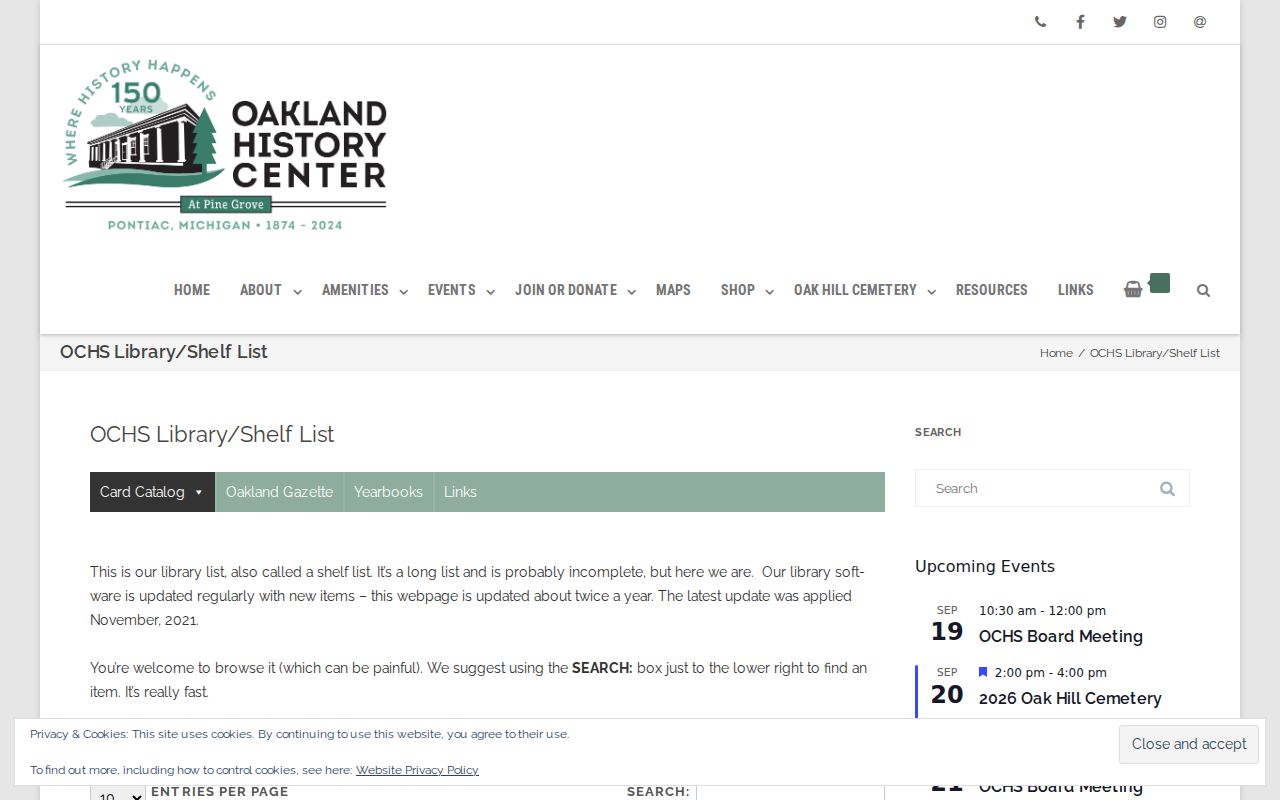
The named shelf list supplies years and publishers that can be requested at the Oakland History Center, even where a searchable online image is unavailable. It also keeps the researcher from assuming a missing year never existed.
Madison Heights Directory Companions
The Heritage Rooms, in the lower level of City Hall at 300 W. 13 Mile Road, hold yearbooks from all Madison Heights schools. They are open on the calendar or by appointment, and the research phone is 248-837-2852. A yearbook can place a former classmate in a school year, while the Heritage Books provide a broader civic and neighborhood trail. The rooms also maintain study space, exhibits, and local historical material that can clarify a name found in a regional volume.
Madison Heights Public Library reports a Daily Tribune resource for local resident obituaries. The 2018 survey described indexed local obituaries from 1970-2009, but current coverage and digitization were not located. Ask library staff rather than assuming a name or year is included. Obituaries can help explain a disappearance from a city directory, but they still need to be read as dated notices, not as a complete household record.
Tracing Madison Heights Directory Households
Start with one exact name or street, then make a short evidence trail rather than guessing from a single listing. Copy the surname spelling, initials, address, and any household notation exactly as printed. Check the street section where the volume has one, then repeat in the next available year. A move, spelling variation, omission, military service, death, or the boundary of the source can all explain why a name stops appearing.
- Find the earliest available entry and preserve the full printed wording and page number.
- Follow the name in the next available directory year, noting every address or notation change.
- Use a criss-cross or street section, if present, to test the address and nearby listings.
- Pair the directory interval with the open 1940 or 1950 federal census pages, then later releases as available under the 72-year rule.
- Use an obituary, probate file, deed, or tax card to test a move, death, or transfer without assuming the reason.
For a current parcel question, use the city's owner and address records instead of treating an old volume as a modern answer. The Madison Heights street directory route is the better fit once the question becomes a current street or parcel record.
Note: A directory is an annual canvass snapshot, so pair it with a census or recorded document before relying on it for a family-history conclusion.
Madison Heights City Directory Access Routes
When a search does not reach the needed volume, use the custody chain. Madison Heights Public Library is at 240 W. 13 Mile Road, 248-588-7763, with research hours listed as Monday through Thursday 10 a.m.-8 p.m. and Friday through Saturday 10 a.m.-5 p.m. The Heritage Rooms can help with local books, yearbooks, clippings, and oral-history material. The Oakland History Center holds the named regional shelf. The Library of Michigan adds county guides, newspapers, cemetery material, plat maps, and FamilySearch Affiliate access.
Library staff can confirm whether a microfilm, regional volume, or licensed collection is currently available. For a document tied to a particular parcel or legal party, shift to the Oakland County Clerk/Register of Deeds rather than asking a directory to settle ownership. A city directory is valuable because it preserves an annual human context, not because it replaces the record custodian.